London Tube Zones Explained: Fares, Travelcards, Oyster and Contactless
London’s transport fare system is based on zones. Whether you are travelling one stop in central London or heading out to the edge of the city, the zones you pass through can affect the cost of the journey.
The system is straightforward once you understand the basics. Zone 1 covers central London, while the outer zones spread gradually away from the centre. Most Tube journeys are paid for with contactless payment or an Oyster card, and daily or weekly caps can limit what eligible passengers pay.
This guide explains London Tube zones, how fares work, and when Oyster, contactless payment or a Travelcard may suit a journey.
How London Tube Zones Work
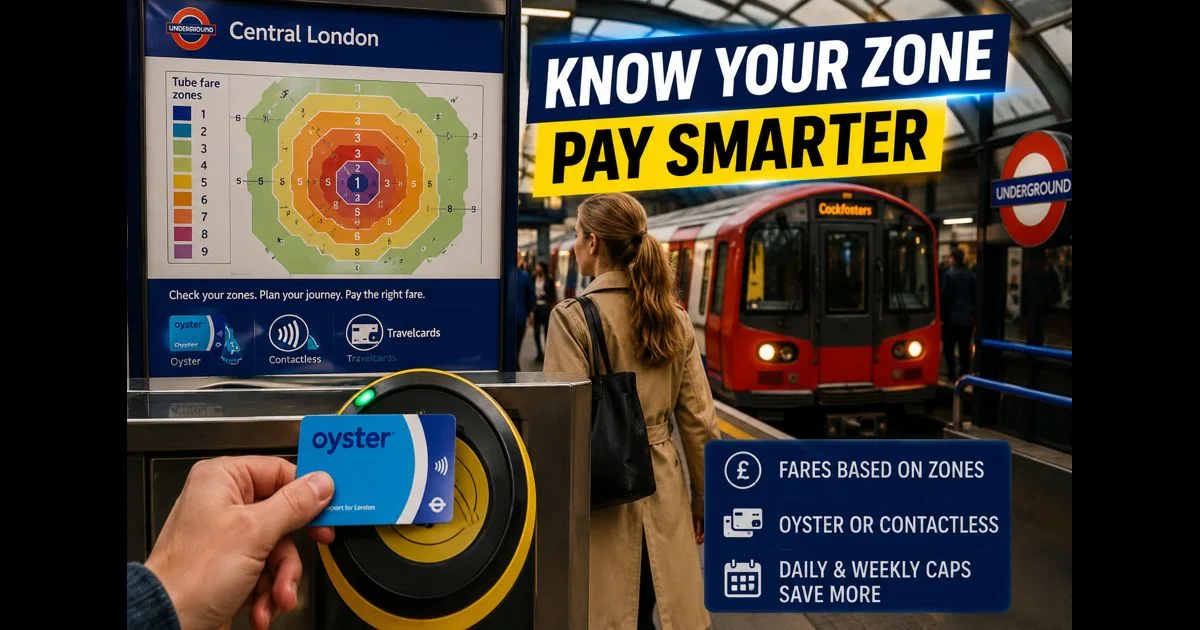
London is divided into nine fare zones. Zone 1 is at the centre, with Zones 2 to 9 arranged around it.
Many of London’s most visited places sit in Zone 1. These include areas around Westminster, Waterloo, Victoria, Oxford Circus, King’s Cross St Pancras, Liverpool Street and London Bridge. As you travel farther out, you move into higher-numbered zones.
The exact route matters. A journey does not simply depend on the start and end zones; it can also depend on the zones travelled through and the service used.
For a clearer view of where the zone boundaries sit alongside stations and lines, see the London Tube map guide.
What Zone 1 Includes
Zone 1 is central London. It covers many major attractions, business districts, railway stations, theatres, museums and shopping areas.
Common Zone 1 stations include:
- Baker Street
- Bank
- Charing Cross
- Covent Garden
- Green Park
- King’s Cross St Pancras
- Leicester Square
- Liverpool Street
- London Bridge
- Oxford Circus
- Paddington
- Piccadilly Circus
- Victoria
- Waterloo
- Westminster
Visitors often spend most of their time in Zone 1 and Zone 2. However, airport journeys, stadium visits, suburban accommodation and some tourist attractions may involve outer zones.
Zone 1 is also where the Underground can be busiest, especially on weekday mornings and evenings. The lowest-fare route is not always the most comfortable route if it involves a crowded interchange or a long walk between platforms.
Stations in More Than One Zone
Some stations sit on a boundary between two zones. These are sometimes called dual-zone stations.
A dual-zone station can be useful because the fare system may treat the journey according to the route and zones used. The exact outcome depends on the full journey, so it is best not to make assumptions based only on a station label.
If you are travelling regularly or want to compare routes for cost, use the official single-fare finder before travelling. It gives the fare for a specific journey and takes account of the stations and route selected.
Paying With Contactless
Contactless payment is one of the simplest ways to pay for Tube travel. You can use a contactless bank card, a mobile phone or a wearable device that supports contactless payments.
To travel, touch in at the start of the journey and touch out at the end using the same card or device. The system records the journey and calculates the appropriate pay-as-you-go fare.
Using contactless can be convenient because there is no need to buy or top up a separate travel card before each journey. It also allows eligible journeys to benefit from daily and weekly capping.
A few rules matter:
- Use the same card, phone or wearable for the entire journey.
- Do not touch in with a physical bank card and touch out with the same card in a phone wallet.
- Keep enough battery on a phone or wearable if it is being used as the payment method.
- Touch in and out even when the station gates are open.
- Check whether the route includes services with different fare rules, especially airport services.
Contactless payment is generally a practical option for adult visitors and London residents making pay-as-you-go journeys.
Using an Oyster Card
An Oyster card is a reusable travel card that can be loaded with pay-as-you-go credit or certain Travelcards. It is used by touching the card on the yellow reader at the beginning and end of a journey.
Oyster works across much of London’s transport network, including the Tube, buses, trams, Docklands Light Railway, London Overground, Elizabeth line and many National Rail services within London.
It can be useful for people who prefer not to use a bank card, want to manage a dedicated transport balance, or are eligible for a concessionary or discounted Oyster product.
The same touch-in and touch-out rule applies. If you forget to touch out after a Tube or rail journey, the system may charge an incomplete journey fare. If this happens, check your journey history and follow the relevant process for correcting an error.
A single Oyster card should not be shared by two people travelling at the same time. Each passenger needs their own valid method of payment.
Contactless or Oyster: Which Is Better?
For many adult passengers, contactless and Oyster can work in similar ways for standard pay-as-you-go travel. The better option depends on what you already have and how you prefer to manage payments.
Contactless may be more convenient if you have an eligible bank card or mobile wallet and want to avoid buying another card. It can also make it easier to see transport spending alongside other payments.
Oyster may be preferable if you want a separate balance for travel, are using an eligible discount, or prefer not to connect transport journeys to a bank account.
The most important rule is consistency. Choose one method for the journey and use it to touch in and touch out. Do not alternate between cards, phones and Oyster unless you understand how each separate journey will be charged.
What Fare Capping Means
Fare capping sets a maximum amount for eligible pay-as-you-go travel over a day or a week. Once you reach the relevant cap, additional eligible journeys within the same zones and time period may not increase the total paid.
The cap depends on the zones travelled through and the type of travel. It does not mean every service or every airport route is included under identical conditions.
Daily caps are helpful for passengers making several journeys in one day. Weekly caps can be useful for regular travel, but they normally depend on using the same contactless card or Oyster card throughout the relevant period.
For capping to work correctly:
- Use the same payment method for every eligible journey.
- Touch in and out properly.
- Check the zones included in your trips.
- Review specific rules for airport routes and premium rail services.
- Do not assume that separate cards or devices will be combined into one cap.
If you use a physical contactless card one day and a mobile wallet linked to the same bank account the next day, they are usually treated as different payment methods. The same is true if you switch midweek.
Peak and Off-Peak Travel
Tube and rail fares can vary depending on when you travel. Peak periods generally apply on weekday mornings and late afternoons, while off-peak fares apply at other times.
The exact peak rules can vary by route, direction and service. Journeys involving airports or specific rail services may have additional fare considerations.
If you have flexibility, travelling outside the busiest weekday periods can make the journey more comfortable as well as potentially cheaper. This is particularly helpful on routes through Zone 1, where trains and platforms can be crowded.
Always check current Transport for London fare information before relying on a particular price. Fares and detailed rules can change.
When a Travelcard May Make Sense
A Travelcard gives unlimited travel for a selected time period and chosen zones. It can suit travellers who expect to make many journeys in the same areas and prefer knowing the cost in advance.
Travelcards are available in different forms and zone combinations. The best choice depends on how long you are staying, which zones you need and how often you expect to travel.
A Travelcard may be worth considering when:
- You will make several journeys every day
- You want unrestricted travel within selected zones
- You are travelling with a group or family and have planned transport needs
- You prefer a fixed ticket rather than pay-as-you-go charges
- Your journey pattern does not fit neatly within a contactless or Oyster cap
For occasional travel, contactless or Oyster is often simpler. For frequent and predictable travel, comparing the Travelcard price with the likely capped pay-as-you-go cost is sensible.
Airport Journeys Need Extra Attention
London’s airports are not all covered in the same way. Heathrow, for example, is served by the Piccadilly line and the Elizabeth line, but fares, routes and journey times vary. Some airport rail services have separate pricing rules and may not be included in ordinary caps or Travelcards.
Before travelling to an airport, check:
- Which terminal you need
- The line or rail service that serves it
- Whether the fare is included in your payment method or cap
- Whether a separate ticket is required
- The latest service status and planned works
This is one situation where checking details before leaving is especially important. A route that looks convenient on a map may not be the most affordable or the most suitable for luggage.
Plan Zones Alongside Your Route
Zone information is helpful, but it should be used with the route itself. A journey with fewer zone crossings may not always be faster, and a cheaper route may involve more changes or a long walk.
When comparing options, consider the fare, travel time, number of changes and comfort of the route. This Underground journey-planning guide can help you compare those details before you travel.
If you are staying outside central London, check the nearest station’s zone before booking accommodation. This gives a more realistic idea of likely travel costs and journey times.
Common Fare Mistakes to Avoid
A few simple mistakes can lead to unexpected charges:
- Forgetting to touch out at the end of a Tube or rail journey
- Touching in with one payment method and out with another
- Assuming a station in two zones guarantees the lowest possible fare
- Using an airport rail service without checking its fare rules
- Sharing one Oyster card between two passengers
- Relying on an old fare table after prices or policies have changed
- Assuming every service is included in a daily or weekly cap
Checking your payment method and route before travel prevents most problems.
Understanding Zones Makes Travel Easier
London Tube zones are not difficult once you see how they connect with the map, fare system and payment method. Zone 1 covers the centre, outer zones cover the wider city, and the cost of a journey depends on the route and time as well as the zones used.
Contactless and Oyster are both practical for pay-as-you-go travel, while a Travelcard can suit frequent, planned journeys. Use the same payment method throughout, touch in and out correctly, and check current fare details for longer or airport journeys.
With those basics in place, it is much easier to travel across London without fare surprises.
